28
08 2026
6 Effective Ways to Extend the Life of Your Pressure Sensor
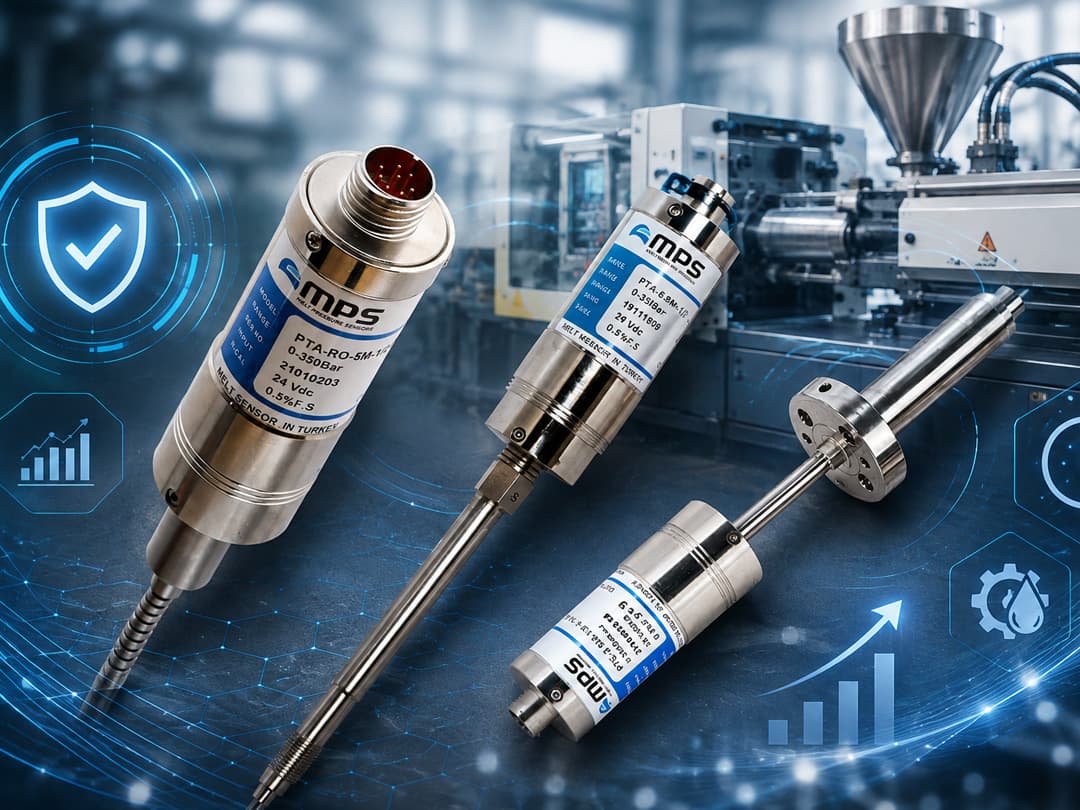
Accurate and continuous monitoring of pressure values in industrial facilities is crucial for the safety and efficiency of production processes. In this regard, melt pressure sensors provide reliable data to control equipment by measuring the pressure within the system. However, factors such as incorrect installation, high temperature, vibration, excessive pressure, and inadequate maintenance can negatively affect sensor performance. Adopting the correct practices is necessary to increase the lifespan of pressure sensors.
1. Choose the Right Pressure Sensor
The first step in extending the life of a pressure sensor is selecting a sensor suitable for the application. The sensor's measurement range must be compatible with the process pressure, operating temperature, pressure type, and the fluid used.
A sensor that does not meet the system's operating conditions will constantly operate at its limit values and may wear out faster. Therefore, during the purchasing process, attention should be paid not only to price and measurement range but also to the technical specifications of the sensor.
2. Install According to Manufacturer Instructions
The mounting method directly affects the performance of pressure sensors. Correct sensor connection, the use of the appropriate torque value, and a clean mounting surface are essential.
Overtightening can damage the sensor's connections or sensitive measuring parts. Insufficient tightening can lead to problems such as loosening and leakage. Therefore, the manufacturer's specified technical values must be followed during installation.
3. Reduce Vibration and Mechanical Shocks
Industrial machinery, pumps, and compressors can generate intense vibration. Continuous vibration can cause mechanical fatigue in the sensor's internal components over time and degrade measurement performance.
Therefore, the pressure sensor should be mounted on a stable location where vibration is lower whenever possible. Suitable mounting solutions providing vibration isolation can be used in necessary applications.
4. Do Not Exceed Temperature and Pressure Limits
Every pressure sensor has a specific operating temperature and maximum pressure limit. Exceeding these values can lead to measurement errors, permanent damage to the sensor, and a shortened service life.
Especially in processes with intense temperature variations, process temperature and ambient temperature must be considered when selecting a sensor. Temperature has a significant impact on sensor performance and measurement stability.
5. Perform Regular Maintenance and Calibration
Regular checks are crucial for ensuring the sensor maintains accurate measurements for an extended period. Measurement deviations can occur in sensors over time. Pressure sensor calibration helps verify the sensor's accuracy against a reference value.
The calibration frequency is not the same for all sensors. It should be determined considering the characteristics of the device used, process conditions, measurement accuracy, temperature variations, vibration, and the requirements of the relevant industry.
6. Keep the Sensor Clean and in a Suitable Environment
Dust, dirt, chemicals, moisture, and process residues can negatively affect the sensor's connection points and sensitive parts. In systems containing aggressive fluids, it is important that the sensor is made of materials suitable for the process environment.
During maintenance, avoid harsh or inappropriate cleaning methods that could damage the sensor, and follow the manufacturer's recommended maintenance procedures. Regular visual inspections can detect problems such as corrosion, loose connections, physical damage, or abnormal measurements early.
Extending the life of a melt pressure sensor is possible not only by purchasing a quality product, but also by using the sensor under the correct conditions and performing regular maintenance. Correct sensor selection, proper mounting, vibration reduction, adherence to temperature and pressure limits, regular calibration, and correct cleaning practices contribute to longer-lasting and reliable sensor operation.
These practices also help reduce measurement errors, unplanned downtime, and unnecessary sensor replacement costs. Therefore, conducting sensor maintenance on a regular schedule in industrial systems is crucial for both production continuity and equipment reliability.